
Technical Resource
CLT and Mass Timber — Moisture Monitoring in Modern Construction
Why CLT changes the moisture monitoring equation
Cross-laminated timber (CLT) and mass timber construction is growing rapidly in the UK, but these structures are acutely vulnerable to moisture damage. Unlike concrete, which tolerates intermittent wetting, CLT panels can suffer irreversible structural degradation if moisture content exceeds critical thresholds — and the damage often progresses hidden behind finishes until it becomes a major structural concern.
For a designer or asset owner, this means moisture sensing in CLT structures is not optional best practice — it is structural risk management.
The standards now addressing this
Multiple standards now address moisture risk in mass timber construction:
- BS 5250:2021 — Provides the framework for moisture management in buildings, including condensation risk analysis and the specification of monitoring systems.
- BS EN ISO 6781-1:2023 — Covers thermal performance assessment using infrared thermography, a key diagnostic tool for identifying moisture ingress pathways in timber-framed and CLT buildings.
- PAS 2035:2023 — Requires monitoring and evaluation plans on retrofit projects that explicitly include moisture assessment.
- BS 40101:2022 — Specifies sensor requirements: continuous temperature and humidity monitoring at 30-minute intervals for a minimum of 12 months, with defined accuracy thresholds.
What Vector specifies for CLT structures
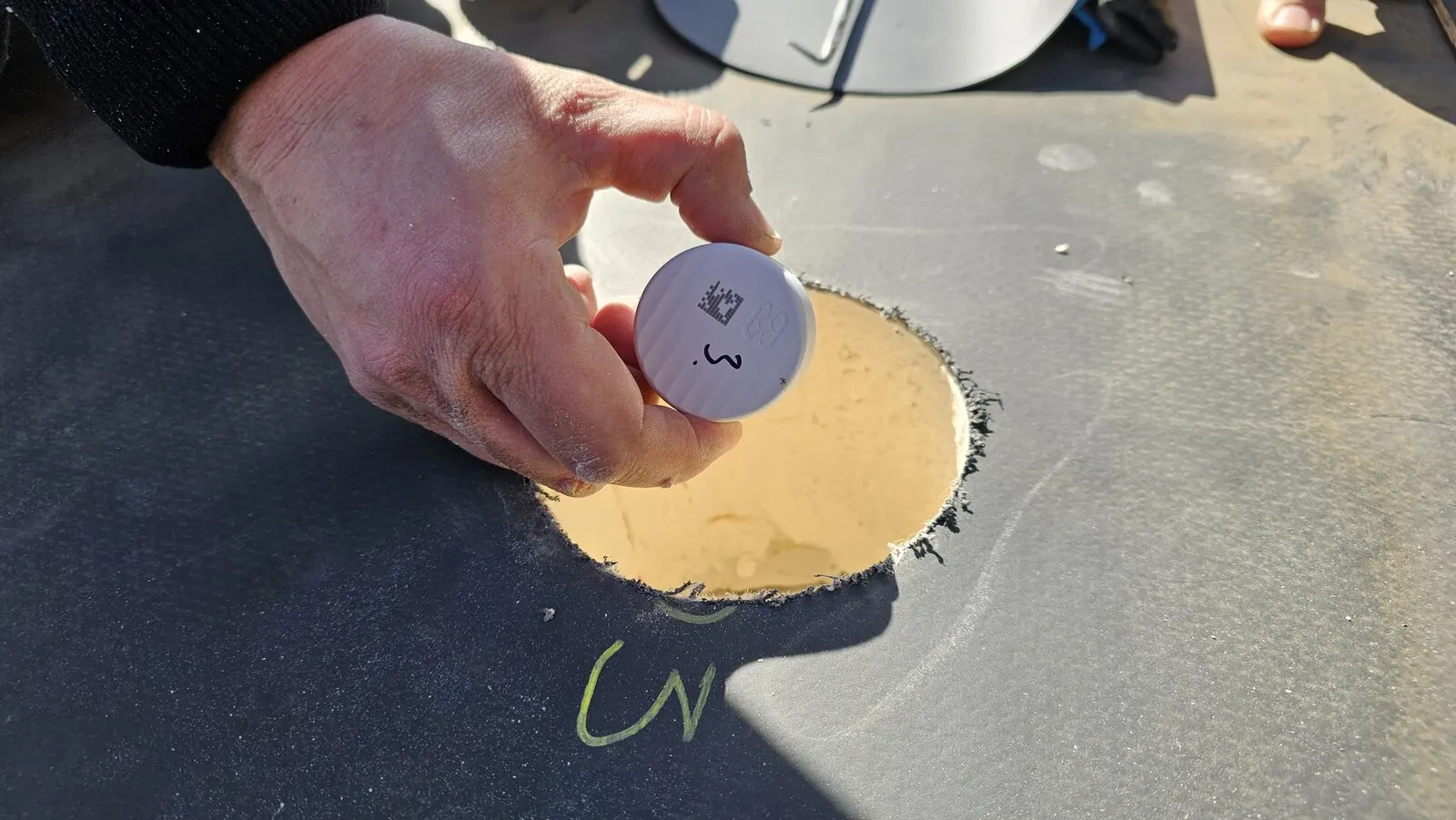
Vector designs sensor arrays for CLT moisture monitoring that satisfy BS 40101 accuracy and frequency requirements, with data logging structured to support PAS 2035 monitoring and evaluation plans. Sensors are placed at known moisture-risk interfaces — junctions with concrete or steel, exposed end-grain, service penetrations — with automated alerting when moisture content approaches structural thresholds.
For developers building in CLT, the cost of installing this monitoring during construction is a fraction of one remediation event. It is the structural moisture monitoring equivalent of a smoke detector — cheap to install, irreplaceable when something goes wrong.
Standards: BS 5250:2021, BS EN ISO 6781-1:2023, PAS 2035:2023, BS 40101:2022 | Publisher: BSI
← Back to all Technical Resources | Permanent Leak Detection & Sensor Monitoring
Read more: our in-depth structural engineer's guide to moisture management in mass timber and CLT, plus detailed guides on safe moisture-content thresholds and monitoring methods.
← Back to all Technical Resources · Permanent Leak Detection & Sensor Monitoring