
Service
Buried Leak Location
We find where your roof is leaking — without stripping the entire overburden. No guesswork. No unnecessary disruption. Just precision, backed by European sensor technology.
Investigate this leakThe problem with buried membranes
Water travels. The leak and the symptom are never in the same place.
When a buried roof leaks, the usual response is a procession of contractors, each with a different theory. Strip back here. Open up there. Weeks pass. Costs mount. The leak persists — because on buried membranes, water travels laterally through drainage layers, insulation and substrate before finding a route down.
Conventional investigation methods are essentially educated guesswork. On a green roof, landscape deck or inverted system, every failed attempt means removing overburden, access costs, and programme delay.
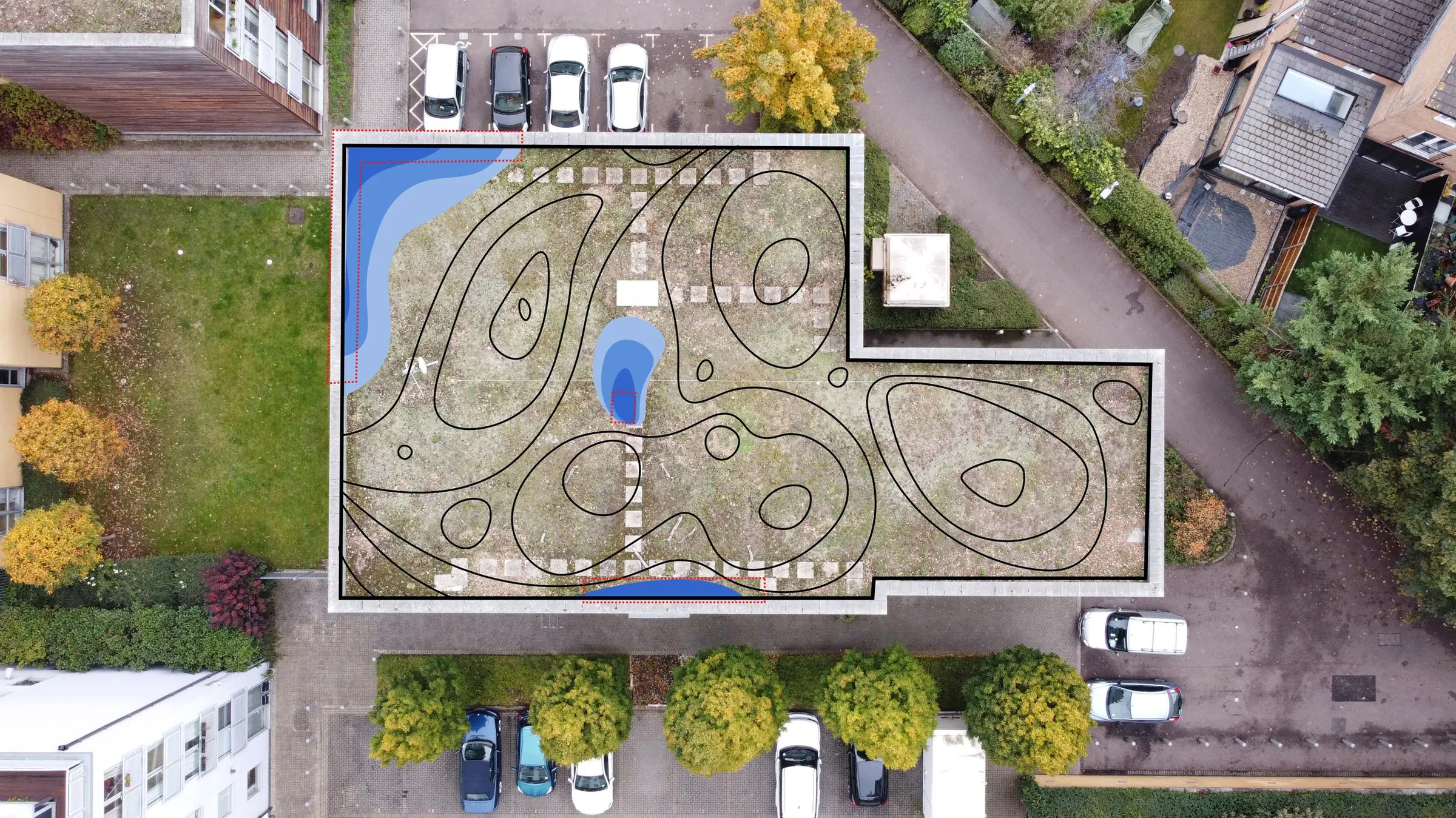
Vector takes a different approach — electrical field mapping that locates the suspected and suspicious areas of the test area and plots the membrane breach to a localised area. This allows you to open up the right area and carry out a localised repair. You don't strip 200 square metres of green roof hoping to get lucky.
How it works
Three steps. One precise location.
From initial inspection to final report — a single, efficient engagement.
- Step 01
Site Inspection
We begin with a full site visit — assessing the roof construction, understanding the build-up and establishing the right investigation strategy before any equipment is deployed.
- Step 02
Electrical Field Survey
Using Texplor technology, we introduce a controlled voltage differential across the waterproofing membrane and use specialist survey equipment to detect conductivity anomalies — the signature of a membrane breach.
- Step 03
Contour Map & Report
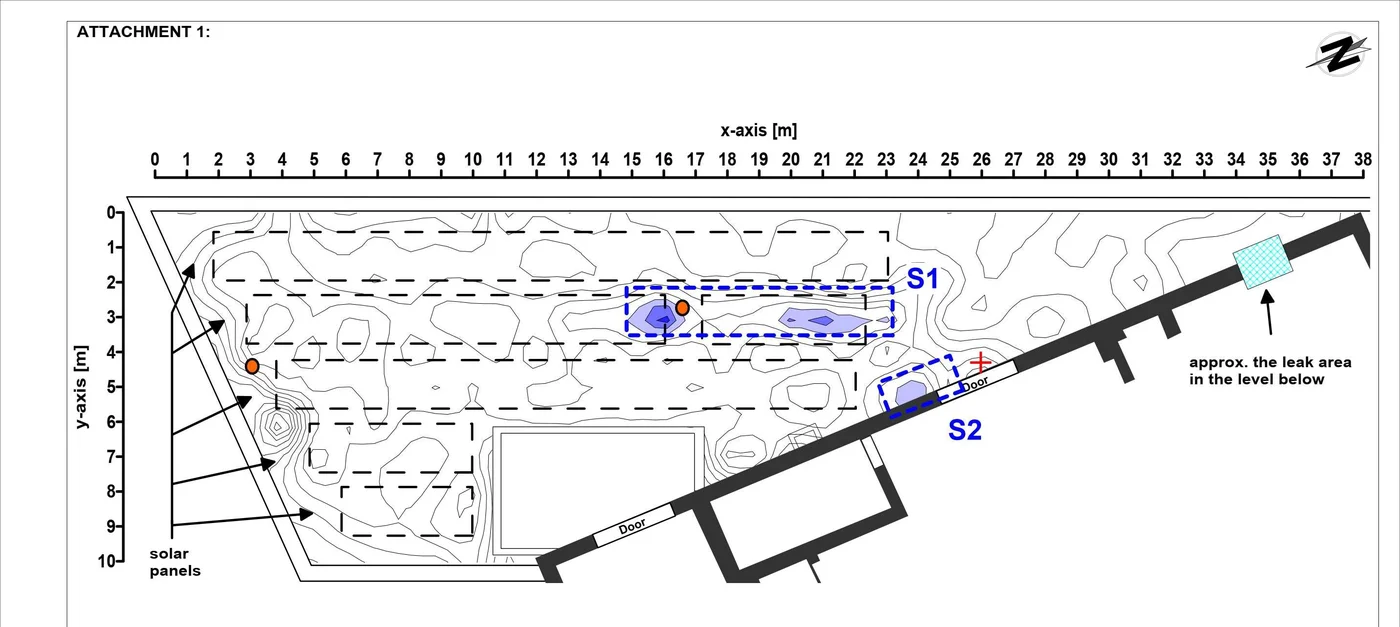
Results are compiled into a contour map that locates leaks to a highly localised area. You receive a photographic record, survey data, a written report and a post-report meeting to discuss the findings from our investigation — everything needed for a targeted repair.
What the contour map looks like
“Their approach accurately identified numerous leak locations, allowing us to resolve the issues with precision and minimal disruption — much to the relief of both the client and residents. I would highly recommend Vector for similar challenges.”
Typical use cases
Where we're called in
- Green roofs with unknown leak source
- Landscape podium decks over occupied space
- Inverted roofs and buried membranes
- Post-repair verification — did the fix work?
- Pre-handover QA and commissioning
- Leak sources that previous investigations couldn't find
What you receive
The deliverables
- Breach location mapped to roof plan (highly localised)
- Contour map showing moisture distribution
- Photographic and survey record
- Written report
- Post-repair verification survey
Technology
Exclusive UK access to Texplor EFT technology
Our survey technology comes from Texplor, a specialist in geophysical measurement based in the Netherlands. Vector holds exclusive rights to use their buried leak location technology (EFT) in the UK — it is not available from any other UK provider.
Frequently asked questions
How accurately can you locate a leak under a green roof or podium deck?
Electrical field mapping locates the membrane breach to a highly localised area, mapped onto the roof plan as a contour survey. You open up one small area for a targeted repair instead of stripping the whole overburden.
Do you need to remove the planting, paving or ballast first?
No. The survey works through soil, substrate, paving and ballast layers. It is non-destructive - nothing is lifted to find the breach.
Which roof types does buried leak location work on?
Green and biodiverse roofs, blue roofs and attenuation systems, paved podium decks, ballasted flat roofs and inverted warm roofs - any buried or concealed membrane over a conductive substrate.
What do we receive at the end of the survey?
A contour map locating the breach to a highly localised area, a photographic and survey record, and a written report suitable for contractors, owners and insurers. A post-repair verification survey confirms the fix worked.
Related technical resources
LRWA GN18:2025 · CIRIA C817 blue roofs · Parklife case study · Tramyard case study
Stop the guesswork. Stop the strip-out.
Tell us about the leak. We will locate it precisely, oversee the repair, and come back to verify it is done.
Investigate this leak