

Roof commissioning · Monitoring · Leak investigation
Independent commissioning for roofs and podiums.
Vector acts for building owners. We check the waterproofing design, test the installation before it is covered and monitor the roof in use. We also locate leaks in roofs that are already failing, which is how we know what to check.
Technical lead
Ben Hickman: contributing author of CIRIA C817 (Blue Roofs), contributing committee member of the BS 8102:2022 revision, Past Chair of the Property Care Association and expert witness in waterproofing disputes.
Work for developers and contractors including
What we are appointed to do
Three roles on a roof, and we say which one we hold.
A roof is designed by one party, installed by another and usually signed off by the people who built it. We are the independent check. We do not sell or supply products, so the advice is only about the building.
Commission a new roof
Appointed for the owner. Design peer review, a monitoring specification, tender checks, site inspections and a leak test before the roof is covered. One appointment, seven stages.
Learn more →Monitor a roof in use
Appointed by the owner or asset manager. Sensors in the build-up report moisture continuously. We review the data, respond to alerts and inspect the roof twice a year.
Learn more →Find a leak
Appointed by whoever has the leak. We locate the breach electronically, without stripping the roof: one survey, one report and a tightly localised area for repair.
Learn more →Sector and specialist pages: data centre roof commissioning, waterproofing design review, buried leak location, green roof leak detection, geomembrane leak detection and CLT moisture monitoring.
Roof commissioning
Seven stages. One appointment.
The mechanical and electrical systems in a large building are commissioned by an independent authority before the building is accepted. We do the same for the roof and podium waterproofing, and stay with it once the building is in use.
- 01
Brief
What the roof must do, agreed with the owner.
- 02
Design review
Drawings and specification checked at each stage.
- 03
Tender
Quality plans, exclusions and substitutions assessed.
- 04
Site QA
Inspections at agreed hold points.
- 05
Verification
Leak test before the roof is covered.
- 06
Handover
Close-out pack and warranty inspections.
- 07
In use
Data review, inspections, maintenance checks.
We can join at any stage. The design stage is the cheapest, and it is the only one where the answer can
still be “change the design”. In use, we plan inspections around the twice-yearly regime that
BS 6229:2025 recommends BS 6229:2025 · Clause 8.2 Inspections A flat roof should be inspected at least twice yearly
In autumn once leaves have fallen, to verify the roof is clear and free-draining and that outlets are not blocked; and in spring, to find and rectify weather damage. Green, blue and other specialist roofs are treated separately - they should be inspected in accordance with the designer’s original inspection plan. The clause then lists what an inspection covers, from ceilings and soffits through to rooftop installation mountings. Extract quoted from BS 6229:2025, © BSI. Summary is Vector’s own wording. Checked against the published standard on 2026-09-11. .
Independence
What independent means here.
Who we act for
As commissioning authority we are appointed for the owner and report to the owner. We do not also work for the roofing contractor or the membrane manufacturer on that project.
What we do not do
We do not sell or supply anything: not waterproofing, not sensors. We take no commission for specifying a membrane, and the design of the waterproofing stays with the design team.
What we disclose
We have no commercial relationship with any sensor or membrane manufacturer. We hold an exclusive UK licence for one survey method, and it is set out in full.
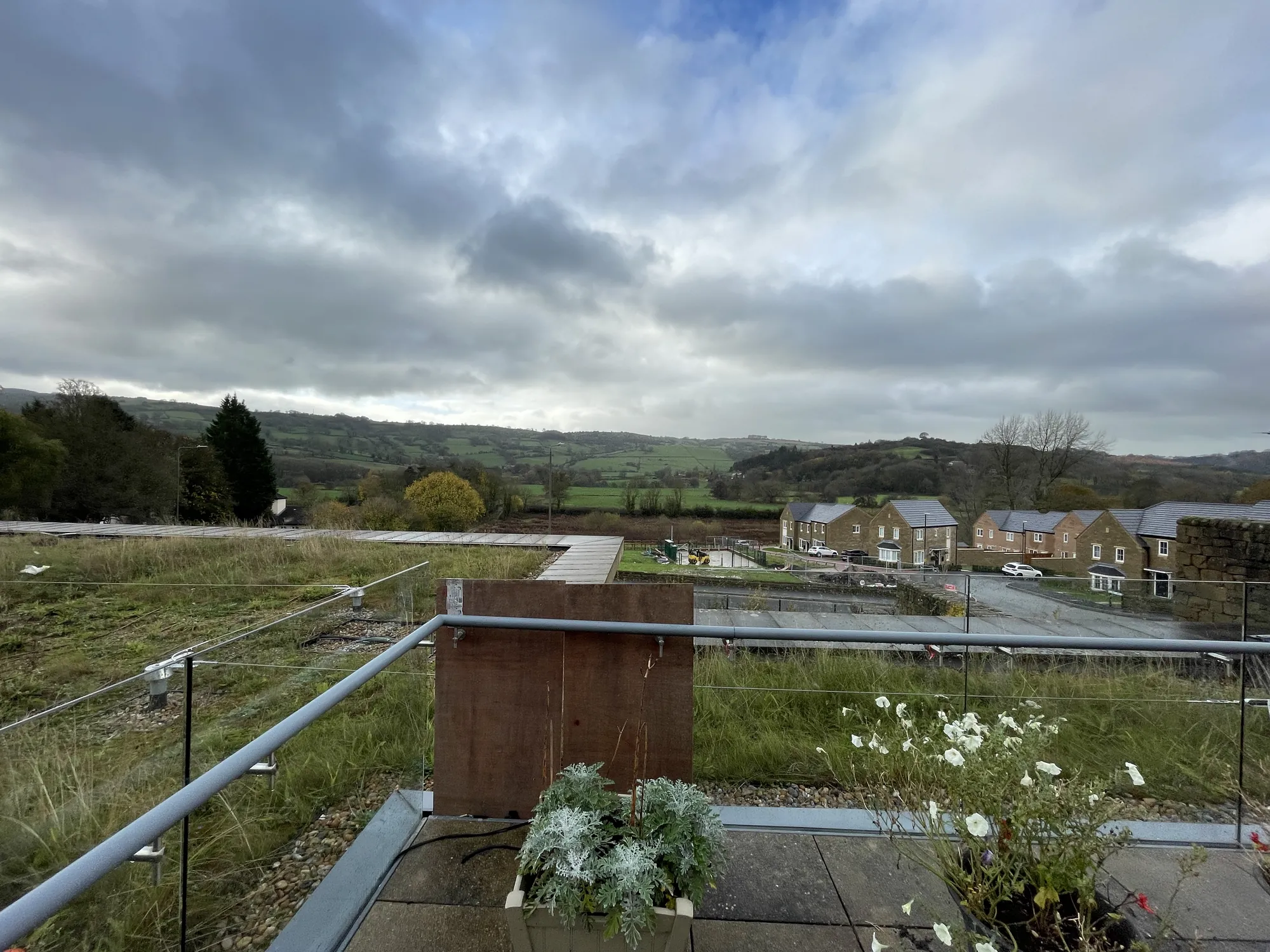
Leak investigation · appointed by Balfour Beatty
“Their approach accurately identified numerous leak locations, allowing us to resolve the issues with precision and minimal disruption — much to the relief of both the client and residents. I would highly recommend Vector for similar challenges.”
We find leaks on finished buildings, so we know which design and site decisions cause them. Case studies
A first look
Send us the roof. We will tell you what we see.
A drawing, a sensor layout, or a photograph of the stain on the ceiling. We read it and come back, normally within one working day, with a view on what is happening and what it would take to resolve. There is no charge for that first look. Anything beyond it is scoped and priced before we start.
On site
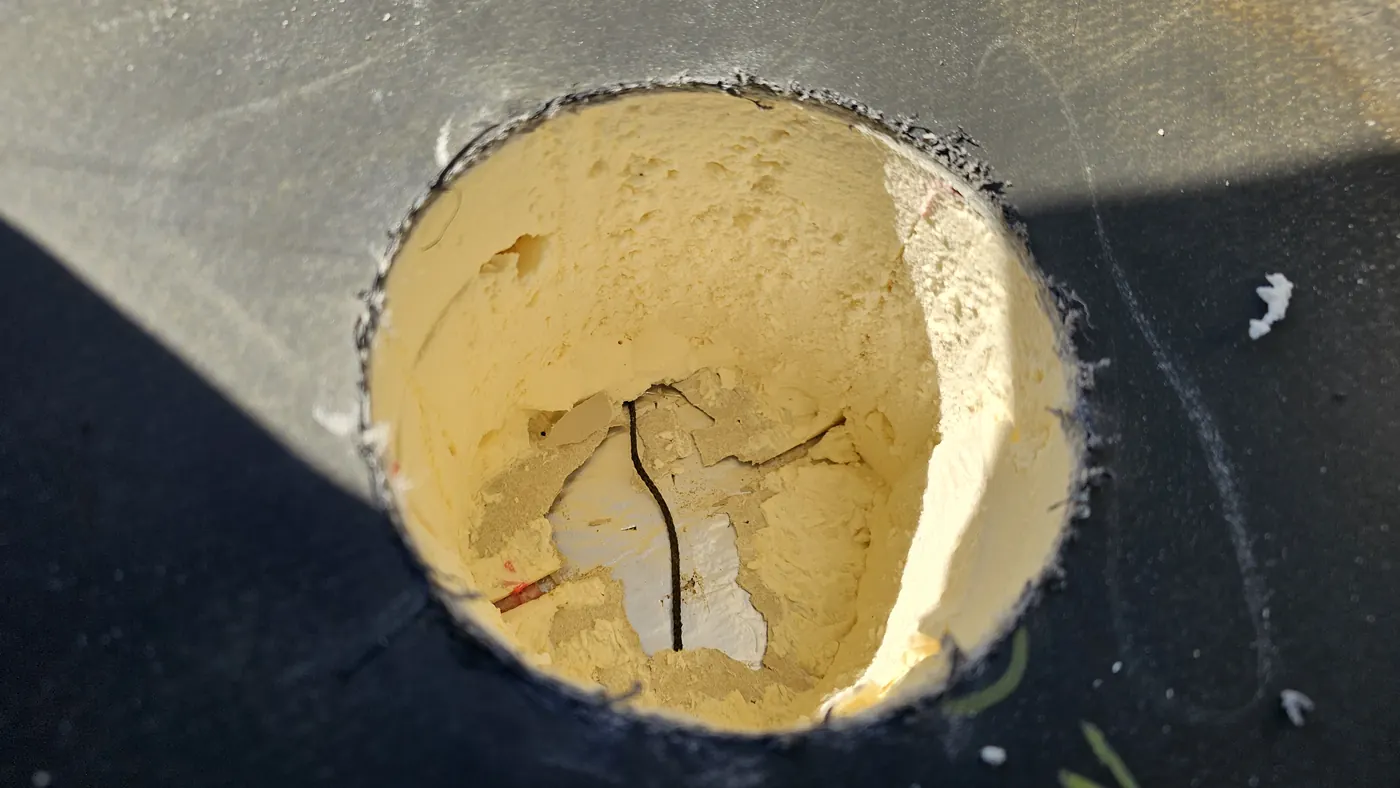
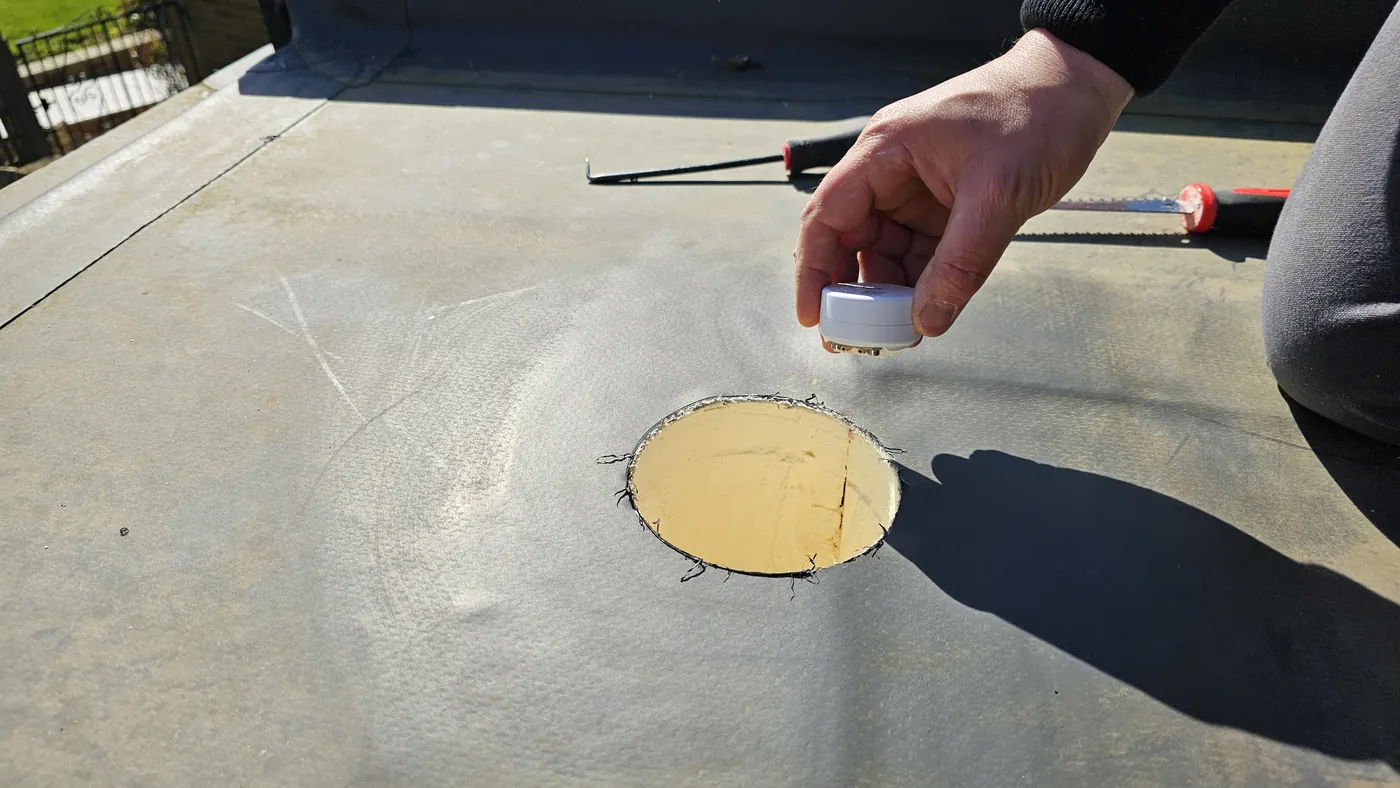
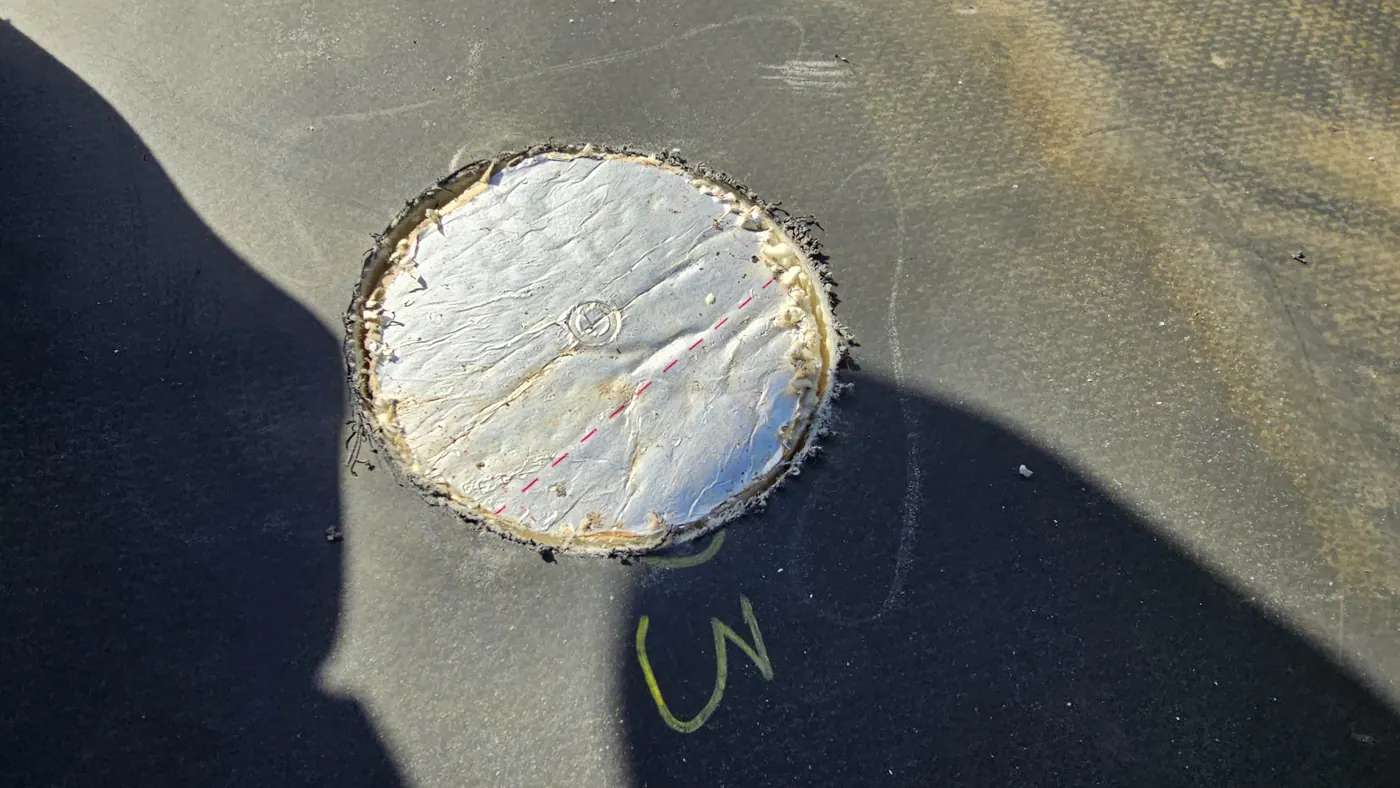
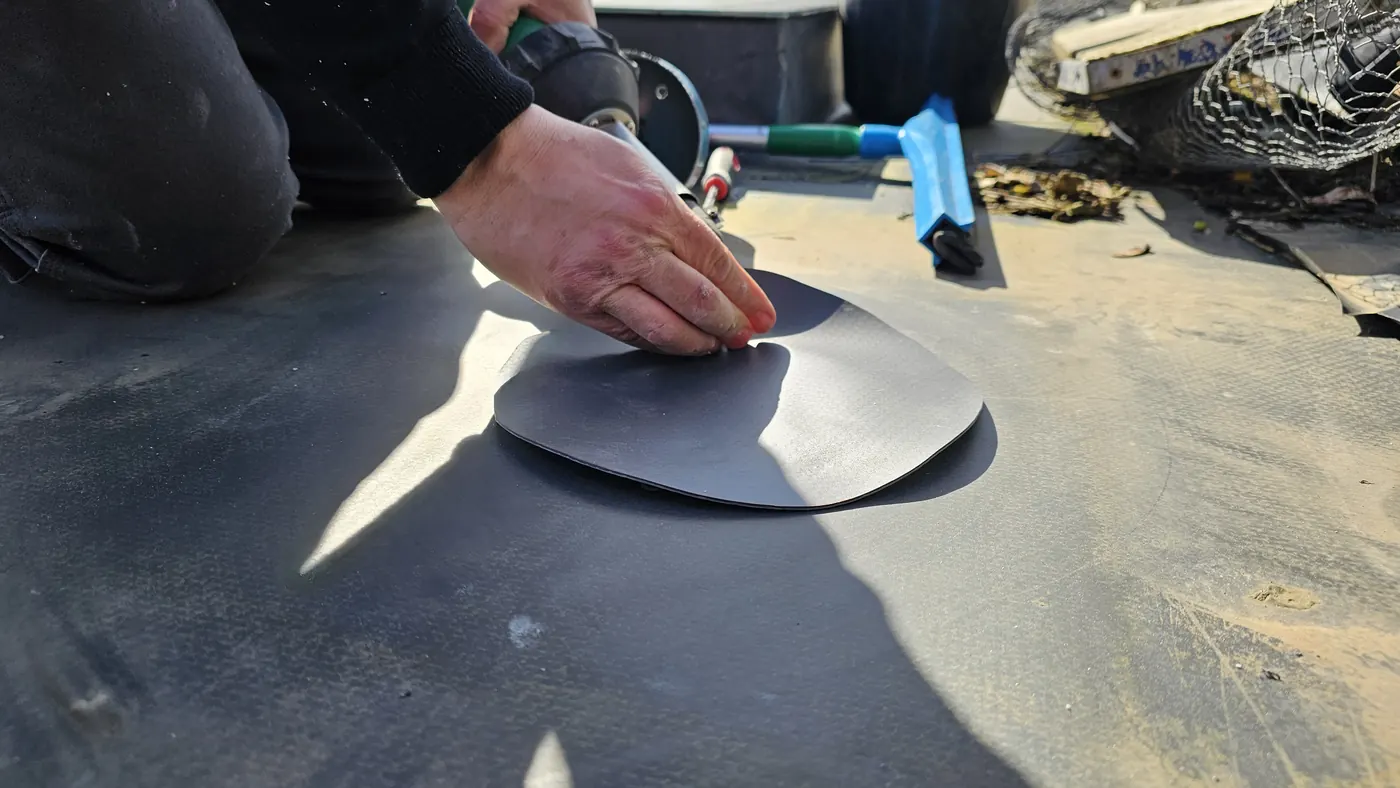
Sensors going into an existing roof
A retrofit: coring through the existing build-up, seating the sensor and reinstating the membrane above it.
Straight answers
Roof commissioning and smart roof monitoring, in plain English
What is roof commissioning?
An independent specialist is appointed for the owner to check that the roof and podium waterproofing is designed, built and tested to do what the owner needs, and stays with the roof once the building is in use. Vector reviews the design, helps write the monitoring specification, inspects the work, tests the membrane before it is covered and then reviews the data and inspects the roof in use. See roof and podium commissioning.
Who does Vector act for?
On a commissioning appointment, the owner: our reports go to them, and we do not also work for the roofing contractor or the membrane manufacturer on that project. Contractors, surveyors and managing agents appoint us separately for testing and leak investigation, and each report says who appointed us. We do not sell or supply products, and we do not take appointments that put us in a conflict of interest. The full position is on the independence page.
What is smart roof monitoring?
Smart roof monitoring means moisture sensors are built into the roof so that water reaching the deck is detected within hours, and located to the affected zone, instead of being discovered months later when it appears on a ceiling. The sensors sit beneath the waterproofing, report continuously, and need no access to the roof to read. It is also described as permanent leak detection, integrated leak detection or smart leak detection — in specifications these terms mean the same thing.
How is that different from a one-off leak survey?
A survey is a snapshot. An engineer attends, tests the membrane electronically, and tells you the condition of the roof on the day. Monitoring is continuous: once the sensors are in, the roof reports its own condition for the rest of its life. Most buildings need both — a survey to establish that the roof is sound now, monitoring to prove it stays that way.
Can sensors be retrofitted into a roof that is already built?
Yes. Sensors are cored through the existing build-up, seated against the deck, and the membrane is reinstated over the penetration. Retrofit is usually specified where a roof is buried under ballast, paving, a green roof or a podium landscape and opening it up to investigate would cost more than monitoring it.
Which roofs benefit most from monitoring?
Roofs where a leak is expensive to find and expensive to suffer: green and blue roofs, podium decks, inverted and ballasted roofs, CLT and mass timber structures, data centres, and any roof over a fit-out that cannot be taken out of service. On a bare, accessible roof a leak can usually be traced quickly by hand, and monitoring is harder to justify.
Do the standards require leak detection in a roof?
No standard makes it mandatory, but several point at it. BS 6229:2025 sets out the inspection and maintenance regime a flat roof needs across its life. CIRIA C817 §3.2.3 recommends that consideration be given to installing a permanent leak detection system on a warm blue roof — it does not require one. ASTM D8551 sets out how a permanently installed leak-detection system should be specified and verified. Where a client specification calls for an integrated system, those documents are the ones that define what good looks like.
How often should a flat roof be inspected?
At least twice a year. BS 6229:2025 §8.2 sets out an autumn inspection, once the leaves are down, to confirm the roof is clear and free-draining and that outlets are not blocked, and a spring inspection to find and rectify winter weather damage. Green, blue and other specialist roofs are treated separately: they should be inspected in accordance with the designer’s original inspection plan. BS 6229 is a code of practice, so it recommends rather than requires — but the twice-yearly regime is what waterproofing guarantees are conditional on in practice, and a roof with no inspection record is a roof with a contested warranty.
How does an enquiry usually start?
Most start with a drawing or a photograph. Send the roof section, the sensor layout if there is one, or a picture of the stain on the ceiling, and an independent waterproofing specialist will come back — normally within one working day — with a view on what is happening and what it would take to resolve it. There is no charge for that first review.
Answers on this page are written by Ben Hickman, Technical Director of Vector — contributing author of CIRIA C817 (Blue Roofs), contributing committee member of the BS 8102:2022 revision, and Past Chair of the Property Care Association.
Latest insights
From the technical blog
Technical Insight
Can You Find a Leak Without Removing the Green Roof?
Yes. A buried leak location survey reads the waterproofing membrane through the planting, substrate and drainage layer and plots the breach on the roof plan, so the only opening-up is about a square metre at a marked position. How it works, what it needs, and when it cannot be done.
Read →Technical Insight
Green Roof Leak Survey: What a Building Surveyor Should Specify
A building surveyor instructing a leak investigation on a green roof, podium deck or other buried membrane: the method to specify, the information to provide, the deliverables to require, and the step that is most often left out. With suggested instruction wording.
Read →Technical Insight
Green Roof Leaking After Heavy Rain: What to Do
A green roof that leaks only in heavy or prolonged rain has a defect that normal weather does not reach. What a facilities manager, asset manager or surveyor should do in the first week, what not to let a roofer do, and how the breach is found through the build-up without stripping the roof.
Read →